
Carbon Capture and Storage (CCS)
Improving best practices and deployment of carbon capture technologies to support progress toward net-zero carbon emissions by 2050.
Excess carbon dioxide in our atmosphere is the key contributor to global warming. Preventing the worst impacts of climate change will require not only significantly reducing carbon emissions, but also actively capturing carbon dioxide (CO2) at the source.
Carbon capture and storage (CCS) is a technological process that "scrubs" CO2 from the emission stream, transports it and permanently and safely stores it underground, reducing emissions from energy-intensive industries. There is no single carbon capture solution, and the process must be adapted to meet site-specific criteria, such as availability of geologic storage or infrastructure to transport CO2.
Analysis by the International Energy Agency (IEA) and Intergovernmental Panel on Climate Change (IPCC) shows that deployment of carbon capture and storage is critical to achieve net-zero emissions by 2050. To reach this goal, the United States will need to scale up to more than 1000 capture facilities nationwide, collectively sequestering at least 1 billion tonnes of CO2 per year.
Carbon capture helped capture 40 million tonnes of CO2 from 26 operating power and industrial facilities globally in 2020. “This must increase at least 100-fold by 2050 to meet the scenarios laid out by the IPCC” says Brad Page, CEO of Global CCS Institute. The United States has 13 commercial-scale carbon capture facilities, with the capacity to capture about 25 million tons of CO2 annually, representing approximately half of the 26 commercial-scale carbon capture projects worldwide.
Public and private sector investment can help industries overcome high initial capital costs and incentivize deployment. In the three years since Congress revamped the federal 45Q tax credit, project developers and investors have announced over 30 carbon capture projects. New and emerging legislation can further support carbon capture and storage as one tool of many that we must leverage to combat climate change.
WRI provides guidance on the development of best practices, regulations and standards for carbon capture. We also participate in developing national and industry-specific strategies for carbon capture deployment, consistent with environmental and social integrity.
WRI’s work on carbon capture has been guided by five principles. Carbon capture should not be deployed unless we can:
- Protect human health and safety.
- Protect ecosystems.
- Protect underground sources of drinking water and other natural resources.
- Ensure market confidence in emissions reduction through greenhouse gas accounting.
- Facilitate cost-effective, timely deployment.
WRI began evaluating regulatory issues for carbon dioxide capture and storage in 2006, convening over 80 stakeholders to formulate the Guidelines for Carbon Dioxide Capture, Transport, and Storage, and the Guidelines for Community Engagement in CCS Projects.
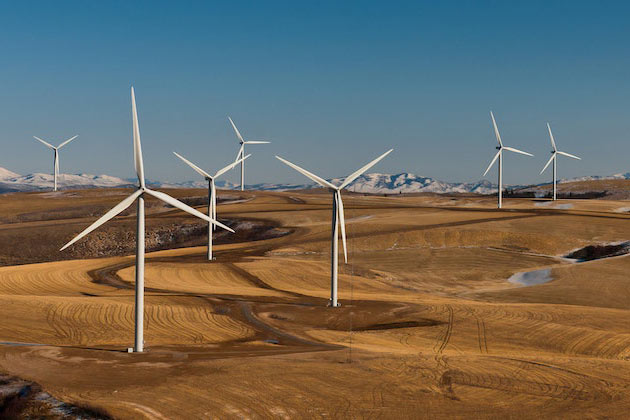
Photo Credit: Alain Duchateau/Unsplash.